Thursday, January 15, 2015

Why Doesn't Facebook Know My Friends?

I went to Facebook today to add someone, and the list of people who I might know was shockingly terrible. I knew about four of the first ~50 suggested, and they were all friends with my wife.

Why is this analysis so difficult? I suspect it has to do with one of three problems:

  1. Algorithm development: Turns out it is harder than you would suspect to come up with a good "lift" formula based on disparate data. To me, this problem seems closest to market basket analysis, the classic formulation of which is "people who buy [item] are also likely to buy [item]" such as bananas and milk. Facebook may just not have spent as much effort on this area as, say Netflix did.
  2. Computing power: Market basket analysis is really computationally intensive, so it sucks up a ton of processing time. Perhaps Facebook has decided it is not worthwhile to spend the money on this element of its business? I am a bit surprised, as it would seem that Facebook users are only as happy as the involvement and extent of their network, but the cost answer is possible.
  3. Lack of knowledge: This is another way to say "stupidity." Actually, that's a bit unfair. I believe that many data analytics groups in companies are approaching the problem wrong. They are trying to find "people closest in the network to this person" rather than "people with whom this person might be most interested in connecting." For example, I see a lot of people on the suggested list who are friends with my wife. That's reasonable, but an even smarter way to approach the problem would be to see that I have lots of connections to college classmates and suggest more of them who are closer to my network or to notice that I just switched jobs and suggest people at my new workplace.
Some of these algorithm suggestions in #3 would involve "tweaking" the algorithm, which data scientists sometimes object to doing. They want purity so that every special group does not need his or her own algorithm. That's where the marketing folks come in.

The Product Manager's job ought to be thinking deeply about what makes people happy on Facebook and then challenging the data scientists to move towards that goal. If more than one algorithm is required (e.g., one for "currently working" and one for "not employed"), the calculation ought to be about cost versus long-term benefit. Those long-term benefits include customer loyalty, a calculation I have discussed previously and which lately is coming into doubt for me and Facebook. Sorry, Mark Zuckerberg.

Thursday, August 15, 2013

Find Your Co-Data

"Co-data" is my term for data that goes well and augments your core data set. I particularly like that The Weather Channel has found consumer behavior data predicting what you will buy depending on the weather. You don't need The Weather Channel's giant data set to find this data set. It could be as easy as looking at your fellow local businesses' websites.

Let's say you're a cab driver. You want to minimize wait times and maximize distance driven. How about finding out when colleges in your area start up again? Or checking out when a particular bar closes? Or finding out the time a particular show (preferably one with drunken attendees interesting in safe-cabbing it home) gets out?

I tried this simple method when I worked at PPG Industries. Of course, our sales of exterior paint increased when the weather got pleasant. Pulling free data off the NOAA Climate Data Center enabled me to do some rudimentary comparisons between our past sales by region and temperature. I found that people start painting more at about 50 degrees F, and that over about 84 degrees F the amount they paint starts to drop off (too hot out).

Using such basic data and simple correlation, I was able to optimize the load-in for our largest retailer's stores so that we had enough exterior paint early in the season... but not too early. I also found that using last year's sales to predict when we should ship this year was a lousy measure; better to use the average over the past three years and then build back two weeks for safety.

At Vocollect, we're discovering lots of cool ways to use the information we have to make our workers' lives easier. We're helping by giving simple suggestions such as prompting the user to access a feature when we notice the feature could be used to solve a problem we deduce the worker is having. The next phase will be to combine this user data with simple information we have from other sources to help suggest, for example, how two coworkers can avoid each other in a distribution center aisle to ease congestion delays.

All this work goes back to my feeling about big data: you don't need it if you have plain old "data" that you're not using in the first place.

Wednesday, March 13, 2013

KPI

No, I'm not talking about Key Performance Indicators. My KPI stands for Keep Pricing Intuitive.

Look at how Southwest Airlines presents its pricing (on the left). It's a thing of beauty. Three categories: "Business Select," "Anytime," and "Wanna Get Away." It's clear what the purpose is, and it's pretty clear that the Wanna Get Away seats will disappear first, then the Anytime, and finally the Business Select.

Why does an intuitive pricing scheme matter? It communicates to your customers something about your brand. In the case of Southwest Airlines, they are saying, "We provide excellent value and make it easy to do business with us." The pricing scheme fits perfectly with the brand image.

I wish more companies, including my own, would understand the value of simplicity and intuitiveness in pricing. That doesn't mean you have to be the lowest price or even the simplest system as long as the pricing is consonant with your brand values.

Simplicity in pricing helps internal people explain what's going on (especially Customer Service). It helps explain to current and potential partners and customers the value of moving to a higher level of engagement, commitment or partnership. And it makes it easy to justify why one customer gets one price and another customer gets an entirely different price, even if those prices are unbelievably different.

For most businesses, salespeople want to get price out of the way in order to talk about the value the product, service or solution can bring. In my opinion, the only way to do so is to make pricing easy to understand. If the salesperson can explain it simply, the conversation is short, allowing the sales representative to focus on more important things such as value-in-use (to justify why your prices are higher than those of your competitors).

Can anyone tell I have been struggling with pricing issues this week?

Friday, March 8, 2013

Hurray for Accurate Depictions of Big Data

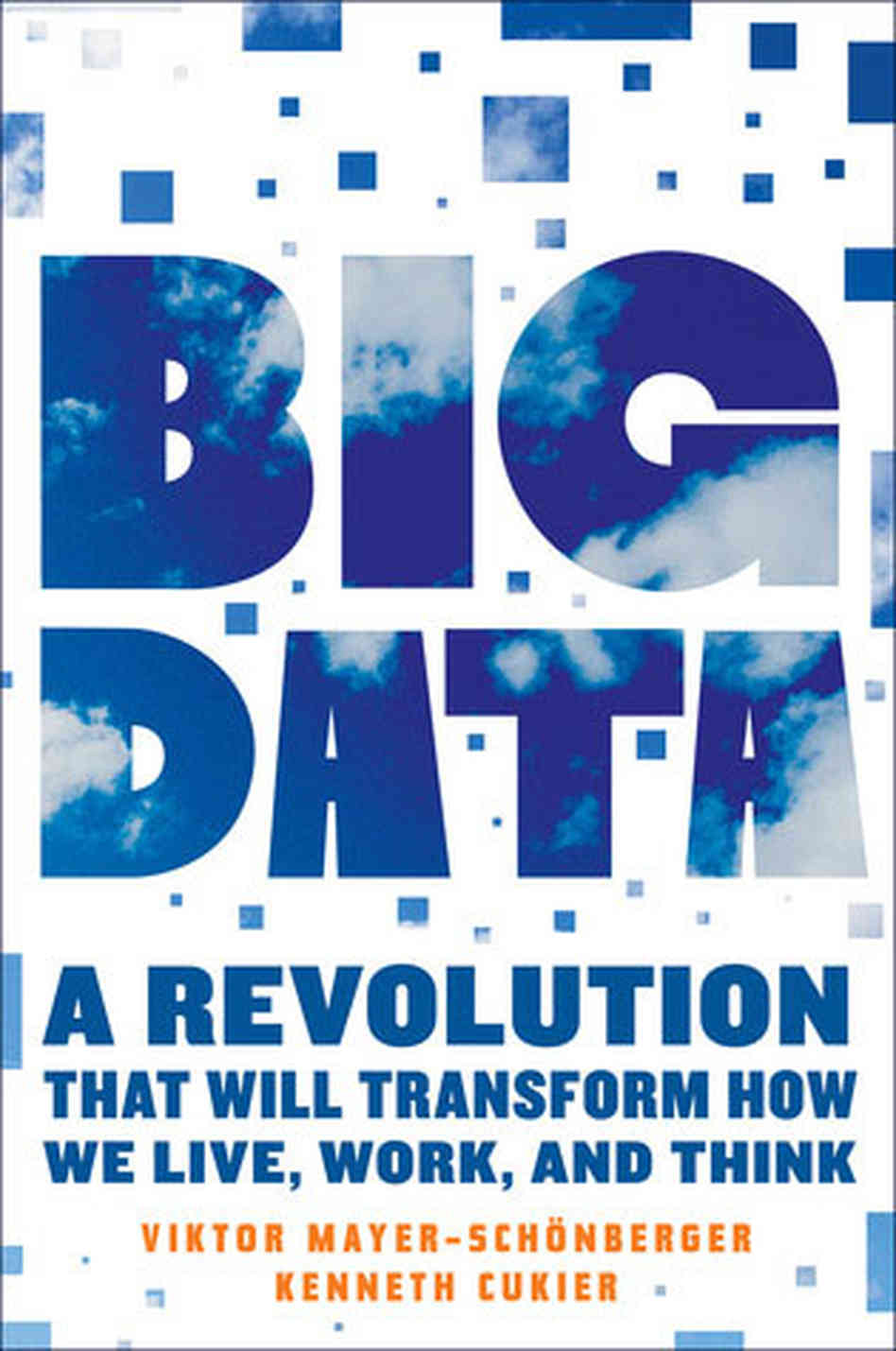
I have long been a fan of the incredible, eclectic blog BoingBoing.net. Cory Doctorow today has this excellent review of a book on Big Data. In the review, he describes big data as:
"a computational approach to business, regulation, science and entertainment that uses data-mining applied to massive, Internet-connected data-sets to learn things that previous generations weren't able to see because their data was too thin and diffuse."
Awesome definition. Notice that "big data" means massive, Internet-connected data sets. Analyzing your CRM data is not big data. It's just data. Applying weather corrections to sales (which some companies have been doing for 25 years) is not Big Data. It's just data. Figuring out your customers' various warehouse sizes in order to tailor solutions to them is not Big Data. It's just data.

If you have been following my blog, you know that I believe passionately about the value of small data. Most companies do not use the data they have. Therefore, I would assert that these companies are ill-advised to investigate Big Data. Rather, they would be better off figuring out what customers want and how to aggregate the information they already have to serve those needs.

In a consulting engagement I had when I first moved to Pittsburgh, I met the CEO of a large regional grocery. He said these exact words to me: "Our problem is that we have all this data, but we don't know what to do with it." Unfortunately, the next moment he was pulled away, and I never got to say to him what I wanted to say:

  • Figure out how customers could help themselves and provide the data to them. For example, let customers opt in to a system that links pharmacy information with shopping data and then let customers scan foods to ensure that they don't run afoul of prescription or health restrictions such as salt content. The grocery would consolidate pharmacy sales with them and provide a great service.
  • Figure out what products sell well together. For example, determine how sales of core items such as spices or core canned vegetables such as kidney beans affect the sales of other items that might be in a recipe and then adjust inventory levels to ensure the critical items are always in stock.
  • Attack low-profit brands with house brands. Purposefully stock out of the national brand on occasion and see who switches to the store brand and what type of person doesn't switch. Target incentives to the non-switchers and align pricing and shelf displays to maximize house brand sales.
  • Provide a way to scan products on the grocery cart itself. Use this data to negotiate with suppliers and optimize brand mix by seeing what products customer consider before they decide on a brand.
  • Capture location-based information on the grocery cart. Use this information in conjunction with sales to reorganize higher-value items in locations where the grocery carts pass more frequently.
  • Analyze sales at a particular time of day to see what high-profit items might fall in popularity. Time screen-based in-store advertising to promote those products at the "off times."
There are so many ways to capture the value of "small data" that many companies just do not consider. Why invest millions of dollars in "Big Data" when you aren't using the data you have? And why not combine "Big Data" approaches with existing "small data" to amaze and please your customers? You don't need a genius to get started on either project.

Tuesday, March 5, 2013

1% Inspiration, 99% Perspiration

Popular wisdom holds that new businesses are 1% inspiration, 99% perspiration. At Vocollect, we find that many potential new markets for our core competitive advantage look very attractive from the outside until one gets into the detail. Fortunately, we have the resources of a large company to investigate these new markets before proverbially "leaving our jobs" to enter these markets.

Start-ups don't have the same resources, but they can be more agile and resourceful when it comes to fulfilling customer needs. Usually, individuals starting the company also do not need a $5 million business within one or two years in order to be successful. Consequently, many smart start-ups target a few customers and learn to serve them well before expanding. In these situations, a gigantic market opportunity will serve them particularly well. Check out my favorite resource on start-ups for more insight.

In case I ever need that 1% inspiration, today I started a new blog to collect all my great (and not so great) business ideas. If you have the sweat but need the inspiration, feel free to steal one of my ideas. Just let me know if you're doing it, please, so that I can track your success... and know not to compete head-on.

Tuesday, February 19, 2013

A/B Testing For Everyone

The folks over at the phenomenal Marketing Experiments Blog had yet another post about A/B testing that reminded me of some consulting work I did in the past. Often, I have found that organizations think you have to be a gigantic company to do A/B testing. The reality is that a company of any size can A/B test just about anything, sometimes to dramatic effect. And a small company can apply very sophisticated marketing analysis very inexpensively in this age of free, high-powered statistical languages.

When I worked for Strategic Energy, management believed we couldn't just send our customers a contract and re-sign them for three years of electricity usage. I said, "What's the harm in trying?" We sent a hundred customers a thank-you for letting us serve them along with a new contract for service. About 35 of them sent us back a signed contract. How much did that test cost? About $300 and half a day of work. After that experience, Strategic Energy started sending every customer under a certain size a renewal contract, saving tens of thousands in sales costs per year for those that responded.

We then sent out postcards to the remaining customers plus about 200 more asking them to contact us about their contract renewal. On one postcard, we put an existing customer photo and an inspirational message about saving their business money. On the other postcard, we put a funny beach photo and a message to the effect of, "Wouldn't you rather be spending your time on the beach than renewing an electricity contract?" We assigned customers randomly to one or the other. To our surprise, the beach one got a statistically significantly better response. Simple A/B test done. Learning learned.

I applied this kind analysis to the funding solicitation work of the Jewish Federation of Greater Pittsburgh to equally powerful effect. In this case, some simple linear regression showed that of the greatest factors influencing the size of the gift was whether the gift was given online (even when holding donor age constant). Pushing customers to the website to donate increased the size of the gifts, and some tweaking to the website itself increased gift sizes even further. All that we needed to complete this analysis was a history of donations and some basic information about the donors and when they responded.

The barrier to basic A/B testing usually lies in company culture, not in cost or capabilities. Companies need to get wired for a "learning culture" that emphasizes marketing science over gut feel. This change must emanate from the senior executive team, and they have to understand how powerful data management and analysis can be to improve marketing response rates, revenues and profits.

As analysis professionals, we need to bring these smarts to the executive team so that they can bring culture change to the rest of the company. I try to remind myself of this goal periodically when I find myself tiring of yet another explanatory meeting with the VPs. Although sometimes repetitive and tiresome, the meetings to explain what we are planning to do after we test result in the executive support necessary to internalize the learning from the testing over the long term.

Friday, February 15, 2013

Revenge of the Data

I have been following with relish the story about Elon Musk's war with the New York Times over a negative review of their Tesla S electric vehicle. What I loved about Musk's retort to the New York Times story is how Tesla Motors managed to use device data to refute the story. The war ends up being a debate between the hard data in the device and the reporter's notes.

I take away three conclusions from this episode:
Reporter's vehicle log as annotated by an angry Elon Musk

  1. Data is power. Companies that think about information they could or already do have available and then exploit that data create sustainable competitive advantage through their installed base. I learned this first hand at PPG Industries, where we were able to use tint machine data to examine paint color usage by region. I only wish that PPG had been more open to using the color chip rack to collect data (discretely and privately) about user interactions with the display. At Vocollect, we are exploring a wide variety of ways to aggregate data from our wearable devices to enhance the user experience.
  2. Companies should get data in the hands of users. I see this war in part as a problem stemming from the New York Times reporter's inability to get all of the information he could have had available...information Tesla then gathered from the log files. Perhaps giving this information to the user in the first place in a snazzy interface could have prevented some of the reporter's frustrations. Heck, a number of device manufacturers give the data to users in an API and end up getting cool tools for their other users for free, created essentially by fans of the brand.
  3. Don't get into a pissing match in public. Elon Musk, known for his huge ego, could have been more diplomatic and apologetic to the reporter. Abusing customers or potential customers does not position the brand for success. And essentially accusing a reporter at one of the most prestigious papers in the world of journalistic fraud qualifies as abusing potential customers in my book. Tesla Motors might have gotten a better response from the Times and better publicity by working with them to diagnose what had happened rather than by working against them. Unless you believe that all publicity is good publicity, in which case Musk did the right thing by making this story huge.\
I will anxiously await the innovations from car companies and any other company that has direct interaction with the actual consumer, enabling us to understand and improve our own behavior. As you know if you read this blog regularly, I hope to be at the forefront of that user empowerment given my sincere belief in the power of some Major Data Geekitude to improve our collective future.

Friday, December 7, 2012

In Praise of Small Data

I can't read anything these days without hearing about "big data." Just popped over to Google News today and learned that Cloudera, a company basically distributing an easier-to-use version of open-source Hadoop as I understand it, raised $65 million in a valuation pegging them as a $700 million company. Holy mackerel!

These crazy valuations put me in mind of what I call "small data." If big data means synthesizing meaning from a million different pieces of disparate information coming from a variety of sources, little data means synthesizing meaning from several thousand pieces of information. In the former case, think of my company Vocollect's wearable computers collecting thousands of bits of information about thousands of distribution center picks per day from hundreds of thousands of workers. In the latter case, think of my company's less than five thousand customers.

Of course there are exciting things to be discovered from the millions of interactions we see from the wearable computers. But there are even more valuable things we could learn from our existing customer base, and I have found that most companies--even gigantic, multi-billion dollar ones--are sorely lacking in the ability to aggregate, clean, and take meaning from these existing customers.

Back at one of my last jobs, we found after six months of aggregating and cleaning that 25% of our sales were coming from 300 customers out of 40,000. You might hear people talk about the "80/20" rule, but that's the "25/1" rule for those of you keeping track. As in, "25% of our revenue comes from 1% of our customer base"! You better bet that the sales leadership, marketing department, customer service team, and even the VP now know the names of every single one of those 300 customers and that the company treats them a lot better than they used to.

Little data is about making small investments in technology, process, and people power to get better information that you should already have access to today. The focus requires all three:

  1. Technology: This is the area everyone always thinks about when data analysis discussions bubble to the surface. Here, I advocate both investments in technology to store the data like Salesforce.com, but also technology to clean the data so it's not completely worthless. How useful is it to sell your brand new freezer-rated wireless headset to current customers if you don't know which ones have freezers? Acquiring the information that's missing requires the second investment...
  2. Process: Great "little data" companies fix the problems of who is responsible for information-gathering, how the information gets into the system in the first place, how you compare it against other systems to ensure links and accuracy, and how it gets cleaned and updated over time. Each of these process fixes ensures that when marketing or sales or finance go to use the information, it gives an accurate and up-to-date picture of the business. That's not possible without...
  3. People power: Great companies assign responsibilities and ownership for the information and, yes, pay for it when necessary. The CEB, my first company, was better at this than any company for which I have ever worked. The way they ensured information was retained was to withhold sales commissions unless the information made its way into ELvIS, our Enterprise-Level Information System (precursor to a real CRM). ELvIS was, by the way, built on MS Access but worked just fine for a long time because of the people and process controls in place. Proving that you don't need a top-flight CRM until the body of data gets too large to manage.
Don't get me wrong. I am generally a huge fan of big data. That's one of the reasons I continue to be bullish on Google, the company with more data than possibly any other company in the world (and a company that understands its value). I'm just saying that small- to medium-sized companies can do amazing things with little data if they pay attention to it and manage it well. That's why you need to hire somebody with experience in this kind of "little data" program and then put serious management attention and focus around it.

A little self-promotion here: I have a lot of experience with "little data." If you ever want to get serious about selling to your existing customers and finding more customers that look like your existing ones, give me a call.

Friday, November 16, 2012

Eye Tracking Revisited

A few years ago, I looked at Tobii's cool eye tracking technology as a possible means of evaluating the effectiveness of paint color merchandisers. I ended up getting a new job before I could complete the project, which was a crying shame given the phenomenally stupid metrics the company was using at the time to determine effectiveness of the display, such as number of color chips pulled per year. Like discrete choice research or any of the other "real life" simulation tools gaining in popularity (has anyone seen the growth of Affinova lately?), eye tracking opened the potential for us to figure out what the consumer really wanted to see rather than what we thought we wanted the consumer to see.

So I was excited to see that one of the Next Gen Market Research 2012 award winners was a company I had never heard about called Eye Track Shop. They claim to have perfected the ability to perform eye tracking using a regular Webcam rather than using expensive equipment like Tobii requires. If market researchers on the client side got the tiniest bit creative with this technology and it really worked, this change in cost could offer a revolution in a huge number of businesses.

Even in our business making industrial hardware, the user interface is critical. We now have the potential to borrow a handful of users for short periods of time over the Web to get reactions to early prototypes before we spend millions on tooling for a product that wouldn't otherwise gain user acceptance. We could also easily test iterations of our asset management console to see what improvements made it more user-friendly. We could even present prospects with versions of our trade show displays to determine what grabbed the most attention.

Imagine the possibilities! What about A/B testing on physical packaging without ever having to ship the package? Store display pre-testing for seasonal merchandising? Improved impact testing of direct mail calls to action? All now possible with inexpensive eye tracking.

Makes me want to start a market research firm. Stay tuned.

Thursday, November 8, 2012

Simple Modeling

For all you people who thought I was going to talk about supermodels, you can stop reading now.

Today's post is about the kind of model you use to determine your forecasted sales or the effects of a future rebate or the effect of a new product introduction. I have been thinking a lot about this kind of modeling lately because of Nate Silver, the statistics genius who accurately predicted the election results two nights ago. Today, the Guardian had an awesome explanation of the likely content of Nate Silver's model which is worth reading in its entirety.

Although Silver apparently uses an advanced statistical technique called hierarchical modeling to perform his analysis, a manager needn't have a degree in statistics to use something more basic but still useful. I put together a similar but simpler model at Strategic Energy using Crystal Ball, an Excel spreadsheet plug-in now owned by Oracle. The software allowed me to build inputs that had an effect on energy prices and then run a series of simulations describing what would happen to electricity prices if my various inputs fluctuated. I chose how each input would fluctuate (for example, natural gas prices might fluctuate in a normal curve by plus or minus 10%) over a period of time, and the model told me the statistical likelihood that the electricity price would get into the range at which we could compete against the regulated utility price.

It's relatively easy to use this kind of modeling in all sorts of applications. I used it again at PPG to help forecast exterior paint sales, using simple inputs we knew to affect our sales such as temperature, rebates, competitor rebates, advertising, and price competition. This analysis helped to show how unprofitable our existing rebate program was and how dramatically temperature spikes increased our paint sales, both of which led to savings and greater on-shelf inventory at our retail customers.

Amidst all this usefulness, I'm constantly amazed when managers prefer to use experience and judgement rather than data to make decisions. Crystal Ball costs all of $995. Why leave your decisions up to chance when you can get fairly accurate help from a fairly simple model for a fairly cheap price (or free if you're willing to learn the R statistics package)? Alternatively, you could spend hundreds of millions of dollars and just ignore the models like this guy did. Good luck with that.

Thursday, October 25, 2012

Read This Now

I was lucky to attend business school with some really smart folks. One is Kerry Edelstein, who founded Research Narrative a year ago today. She has a great post today about interesting questions in media research. It's worth reading particularly because of the emphasis on the business decisions made based on the research. You all know I'm a huge fan of determining the decision you're going to make before doing the research, so I couldn't agree more.

Attention to all full-service market research firms out there: don't forget the message! I always prefer you to come back with a viewpoint. If I don't like what the research said, I can dispute your interpretation with facts, but I (hopefully, if you have done good research) can't dispute the facts themselves. Now, it's up to you to present a story about the facts and help me understand what to do as a result. Then listen to me and help guide my restatement of the story in a way I can tell management.

If Kerry continues to do that for her clients, Research Narrative should go far.

Monday, October 22, 2012

Poll Watchers Beware

Every presidential election year, I find myself re-addicted to an awesome source of polling data, pollingreport.com. These guys aggregate the raw results of various independent polls and post them in a mostly unexpurgated format. I only wish I could do cross-tabs to break down the results further (e.g., by number of Democrats versus Republicans, age, sex, income, and so forth). Frankly, I find the raw data much more enlightening than much of the terrible commentary. [One notable exception to the usual polling pablum was today's excellent Dianne Rehm show with two experts breaking down the polling into the necessary detail.]

Particularly telling is the number of people who are "unsure" or "refused" as reported in some of these polls. The numbers are as high as 8% in some polls, suggesting that a lot of people are either still undecided, are dedicated to the old-fashioned privacy policy about politics, or are just sick of being asked. Nevertheless, one sees that Obama has quite a lead in a number of these polls when voters are given the option to be unsure.

I often find that business executives want to ignore the "don't know" responses in survey data. I believe they think the results are somehow less meaningful if a lot of respondents don't know the answers. On the contrary, I think executives can learn a lot when people are given the "don't know" option.

For example, when I was on the Paint Consumers Research Program board, we changed the survey to allow respondents to say "don't know" when asked what price they paid for paint. Not only did we get much more accurate results, we discovered that almost half of respondents don't know what they paid, even when the purchase was a month ago or less. From this, I learned that price is a lot less important than I think most paint industry executives think it is. In fact, I believe that price point (low, middle or high in the store's assortment) is probably much more critical in paint buyers' decisions than actual real price. This effect could explain in part why consumers are willing to pay $50 per gallon at Sherwin-Williams when they can get decent paint at $35 per gallon at Lowe's or Home Depot.

Some of the most important decisions in new product development fall to market research interpretation, so I believe everyone involved needs to take a closer look at the results. Surprisingly, for example, the products most likely to succeed are often the products with the most positive responses and the most negative responses. When respondents rate new product ideas, the lack of a strong visceral reaction usually indicates disinterest whereas a strong negative reaction can mean that they have a real interest in the product but are not willing to buy it themselves. A number of market research startups have popped up recently to capitalize on this idea by having respondents design products "for other people" instead of making decisions with themselves in mind.

Perhaps this could be good news for Mitt Romney, whose negative ratings have been going through the roof lately. But not if you subscribe to the idea that real money markets can predict presidential elections. If that is true, our next four years will be Obama's second term.

Tuesday, October 16, 2012

The Globalization Dilemma

My present job includes "Pricing Manager" among the various job descriptions. Facing a challenge in getting IT time to fix our quoting tool (let's face it -- who hasn't had this problem at a company that is not Google?), I turned again as I have in the past to outsourcing. I have successfully used Guru.com in the past to find someone to do the work, but this time I turned to oDesk due to the nature of the work. Within days, I had found a Ukrainian developer with an amazing command of English and 20 years of experience in Java and Visual Basic including extensive work on Excel applications.

As I symbolic analyst, I often find this kind of experience troubling. When it comes down to it, most of my job could be performed anywhere in the world. I often suspect that most of the companies that hire me could find someone in India with my exact qualifications plus a Ph.D. and a background in computer science for 70% of my salary. George, my new Ukranian developer, earns $25 an hour for doing work for which I would probably pay $45 an hour at a minimum in the U.S. His English is so good that he knew the idiomatic phrase, "The devil is in the details." [Funny note of the day: in Ukranian, the literal translation of their equivalent phrase would be, "If your head is stupid on details, your legs go this way and that."]

On the bright side, this kind of internationalization means that local understanding and specialized skills can be in demand anywhere. For the market research expert in me, I find the outsourcing experience liberating because I know that some of my expertise and specialization in the U.S. consumer and B2B research market cannot be matched by someone else. Moreover, the internationalization gives me the opportunity to apply these skills to companies interested in selling into the U.S.

As a sidebar, I am in love with oDesk's awesome contractor time tracking tool called "Work Diary." It takes snapshots of your contractor's work periodically to show what they have been doing with their time. From the client's perspective, this approach gives me confidence that the contractor is working on my job when he says he is working. From the contractor's perspective, Work Diary makes it easy to track billable hours to your client and provides proof that you are billing for legitimate work if the client questions what is taking so long on an hourly project.

I foresee a future in which the percentage of work done on this kind of contract basis goes up dramatically. I can imagine that a number of companies interested in entering the U.S. market would not want to hire a market research professional full-time to do the market entry due diligence and might not have the money (or knowledge or project management abilities) to employ a full-service market research firm. These firms might turn to someone like me for a time-limited engagement that would expand their knowledge as much as they need to take the first steps in the U.S.

Overall, I think I am looking forward to this future, working on varied engaging projects for a range of interesting companies. I just have to get over my natural fear of being replaced by someone less expensive.

Monday, October 15, 2012

Breaking the Sound Barrier

Felix Baumgartner recently broke the world record for the highest skydive at 128,000 feet. The Guardian had an excellent story today about the partnership between Red Bull and Baumgartner. What I love about this idea is breaking the sound barrier... for the brand.

The "sound barrier" I'm talking about is the clutter of noise in today's multi-channel, multi-media environment. I was writing about this problem back in 1994 when I interned at advertising agency Ingalls, Quinn & Johnson in Boston before Facebook was even a twinkle in Zuckerberg's eye (I think he would have been getting his first pimple around that time). Media clutter has gotten so much worse in so many ways since then.

Breaking through the clutter often requires doing something that has never been done before. For Red Bull, it means an outlandish partnership that could have landed the brand in some trouble if Felix Baumgartner had been injured or killed. But for your brand, the partnership doesn't have to be so outlandish. For example, Barack Obama in 2008 created the world's first true nationwide, cloud-based expert system for elections that targeted voters at the individual level with grass-roots (read: millions of volunteers) targeting. This effort was a huge risk although not to the brand itself. Rather, Obama risked misusing millions of campaign dollars that had traditionally been spent on TV.

I have spoken before about one of my favorite marketing books: Mark Stevens' Your Marketing Sucks. Underneath the unpleasant title are many great tales of how to create breakthrough marketing, like Red Bull's stunt, that push the limit of marketing. His premise, with which I heartily agree, is that if you're not making a spectacle of yourself for the sake of the brand, you're probably wasting your money. If nobody sees the marketing and nobody responds, you wasted the money. Period.

Tuesday, September 25, 2012

Timeframe

I have created market research and business intelligence functions in a variety of industries, but my current job is my first in a pure technology company. As such, this is my first direct experience outside of my consulting work that has to take into account timeframe in strategic planning.

Timeframe turns out not to be super important in most industries when you can create a sustainable competitive advantage. Theoretically, it should have been easy to create a great competitor to IKEA, Southwest Airlines, or any of the companies with truly integrated strategies. In practice, however, each of these companies has grown for decades without serious competition on the same business model.

This long period of unchallenged growth rarely exists in technology industries. Dell and Microsoft had a relatively long two decades of growth before their business models started to become outdated, but they are the exceptions that prove the rule. I remember a survey we did at the Corporate Executive Board in 1998 asking what company would dominate the software world in 20 years, and the majority of respondents answered, "A company that we haven't heard of yet." It's getting close to 20 years later, and I believe few of those individuals would have guessed Google.

"Sustainable competitive advantage" simply means something different in technology businesses because of the speed of innovation, often from forces outside your own industry, which makes compromises underpinning your strategy no longer valid. Netflix is the classic example. In their heyday, DVD rentals by mail made a ton of sense and Internet-based delivery of movies sounded crazy. Fifteen years later, bandwidth explosion, Moore's Law, and the plummeting cost of hardware has made DVD rentals by mail almost quaint.

So what's a company to do? Follow the Netflix example (no, not pissing off your customers) by continuing to innovate. Netflix saw the future death of their sustainable competitive advantage before anyone else did and spent millions trying to make their own model obsolete. They recognized that if they failed to kill their own company, someone else would. Which is why I watch movies through Netflix on my Wii today.

You don't have to be a technology company to take this approach to heart. If Kaplan or Princeton Review had been a little more thoughtful and innovative, they might not be getting killed today by Revolution Prep, a startup college test prep company that changed the model from book-based learning to online, adaptive training. Should've been obvious to see that one coming.

Tuesday, September 11, 2012

Inspiration Versus Perspiration

You've heard that genius is 1% inspiration and 99% perspiration? Well, I was interested to read a few months ago an insightful article on Wells Fargo and their success in retail and commercial banking. The relatively new CEO John Stumpf states that a good strategy flawlessly executed will always win versus a brilliant strategy poorly executed.

I would personally modify that statement a bit. I believe that a good strategy enables flawless execution but does not ensure it. In other words, a good strategy is necessary but not sufficient to win.  I would say that company success is 20% strategy and 80% execution. But you can't get the 80% right without the 20%.

I advocate the concept of "employee bandwidth" in management. The executive team has only a certain amount of time in the day, so anything that distracts their focus from work critical to the future of the company will ultimately help to sink the company. Having a single strategy, with elements that are mutually reinforcing and move towards a common goal, enables everyone to use their limited bandwidth to drive towards greater customer insight and profitability.

Where does market research come in to this equation? Done properly, the market researcher stands at the vanguard of understanding customer value. When communicated properly to executive management and the company at large, the market researcher has the unique responsibility to explain how to break value compromises that customers have endured in the past.

Take Southwest Airlines as an example again. The market researcher should have explained that pleasure travellers are willing to give up many perks of flying to get a better price. They are willing to give up free food, assigned seats, flight attendants in uniform, first class seating, entertainment options, non-stop flights, but not on-time arrival. Southwest Airlines could therefore orient their "value" offering to eliminate most perks as long as turning around the plane quickly (a key to their strategy) did not result in late departures.

Most of Southwest Airlines' approach helps to ensure that they can turn planes around quickly and still achieve one of the best on-time records in the industry. Nevertheless, their strategy has been devilishly difficult to implement. In fact, Herb Kelleher repeatedly has taunted his competitors to try his approach because he knows how difficult it is.

Difficult-to-execute strategies are not bad; in fact, they are excellent. "Difficult to replicate" equals "long-term competitive advantage." The history of companies attempting to copy Southwest Airlines is filled with failures, and I can only think of one partial success (Alaskan Airlines).

The great moment for the market research professional is the moment at which the strategy has been set, and the company is desperate for more information on what the customer is or is not willing to give up to get the benefit your company now offers. If you're offering a complete ecosystem of products that work seamlessly together, is the customer willing to give up in-person service? If you're offering the same product as competitors for half the price, is the customer willing to order direct instead of going through a distributor? If you're offering unparalleled service, is the target customer willing to pay a premium price and still give up ever going into a physical store? Market research can and should be spending money to find out these secrets.

Thursday, September 6, 2012

What Is Strategy?

Having just finished presentations for Vocollect's strategic planning efforts this year, I am reminded of one of my all-time favorite business articles, Michael Porter's "What Is Strategy?" (You can find a free copy here apparently.) In a nutshell, Porter argues that strategy is a set of inter-related and mutually reinforcing decisions about what to do and not to do. Companies that try to execute two strategies at once often pay a "straddling penalty" because the two strategies compete for resources and detract from each other. Take a look at the diagrams, in particular, which I have found wonderfully instructive for explaining how good strategy works.

Back when I was in the paint industry, Benjamin Moore had an excellent strategy:
  1. Target the residential repainter.
  2. Sell through dealers only (no home centers, no company-owned stores).
  3. Market to consumers as "high-design, high-fashion, color-forward."
Each of these decisions had implications and mutually reinforcing benefits. Targeting the residential repainter meant making the paint easy to apply, high coverage, and fast to dry. In fact, Benjamin Moore's highest-end paint dries so fast that regular consumers can't even use it because they paint too slowly. The company seems to have skimped a bit on the qualities that consumers value such as ability to wash the walls without leaving marks, but residential repainters don't care about these qualities. Selling through dealers enables full support for the design aspects that consumers value. The high-design positioning justifies the higher price at the dealer as well as making consumers tend to ignore the less appealing functional qualities of the paint in favor of the design knowledge.

I often look at technologies in our industry and wonder why nobody has tried to own a strategy in RF scanning devices. They are really just sold as commodities, but the supply chain market has room for a number of potential strategies:
  • The "Dell" strategy: go direct, reduce cost and inventory, become a "fast follower" on technology, customize orders prior to shipment, compete on price.
  • The "Apple" strategy: sell through proprietary network of high-value consultants, work really hard on the user interface, make the devices intuitive for users, solve problems in the supply chain with easy-to-download "apps" for the devices, provide a robust ecosystem of matching applications (printers, device management software, etc.), limit inter-operability to require the entire ecosystem and provide benefits for using all one vendor's ecosystem.
  • The "Sub-Zero" strategy: go super up-market, provide extraordinary value for a premium price, sell through a network of carefully chosen partners with only the best knowledge base, focus only on niche applications that cannot take a commodity scanner.
I would be hard-pressed to explain any RF scanner's strategy in this space although many have a positioning. Consequently, none of the vendors seem to be making lots of money with RF scanning. Fortunately, I believe that our parent company Intermec has some of the best technology and thinking in the field and has the ability to create a break-out strategy that could win some serious market share and profits. Maybe I'll send them the article.

Friday, August 3, 2012

Rethink Marketing

Immediately after watching Rebecca Soni's gold medal win on NBC that set the new world record in women's 200M breaststroke at 2:19.56, I saw an AT&T advertisement. A girl with wet hair walks out of her bedroom watching the same gold medal win on her mobile phone. She hears the new world record, pauses for a moment, and then writes on a whiteboard near the front door, "GOAL: 2:19.56."

AT&T's advertising agency must have figured out how to put this ad together between the NBC taping in the afternoon and the final in the evening, but from the viewer's perspective it seemed instantaneous. The tagline, "rethink possible," was a double entendre, talking about rethinking the goal and about rethinking what's possible in instantaneous media.

The genius of the ad was the fact that I am talking about it at all. In fact, I told my wife, my son and several people at work about it. Can you say that about any other advertisement you saw during the Olympics?

The first rule of advertising is to make sure people remember you. Without recall, the ad was a waste of money. Thinking creatively about how to get attention in this media-saturated era will grow in importance over time. Today, at least, AT&T seems to have figured it out.

Monday, July 23, 2012

The One Thing

What's the one thing that makes it as clear as day why your product or service blows away the competition? Today I discovered a great video we have at Vocollect that illustrates this idea. It's a side-by-side comparison of RF scanning versus Vocollect Voice(R). I'm planning to use this as a demonstration to an industry analyst who is not really familiar with our solution and what it can do for distribution center productivity, accuracy and labor management. Skip to the two-minute mark to get the meat.

Personally, I think we should feature this video in almost every interaction we have with prospects. It illustrates the beauty and simplicity of voice even against a proven, nearly ubiquitous technology. The video allows someone who has no experience with our technology to see immediately why we slaughter competitive technologies in most head-to-head comparisons.

I would challenge any brand, product or service to come up with a similar comparison. The best brands often do. I remember a series of great Jeep advertisements many years ago that showed a series of scenarios in which the only way to get to the location was in a Jeep (the best of which was the site of an SUV commercial in which the director wanted to get the SUV on top of a mountain, and the company was going to fly it in--following which the director drove back down the mountain in his Jeep).

If your company doesn't have a great side-by-side comparison, part of your marketing stratetgy needs to be finding the change that you can make that might illustrate the difference. We're going through such a strategy exercise right now to help us determine the next great comparison Vocollect will be able to make. Even though we own the market right now, it is never too soon to find the next great "one thing" that will destroy your competition. And we would rather find it ourselves than have our competitors do so.

Monday, July 9, 2012

Startup Marketing

Today, I'm super excited about Opera Theater of Pittsburgh's Summer Fest. We took my kids to The Magic Flute on Sunday afternoon. I wasn't expecting much, as this opera company is the smaller and lesser-known one in Pittsburgh. (Can you believe my awesome adopted city has not one but two opera companies?) I was blown away by the quality of the singing, the excellence of the orchestra, and the overall quality of the production and inventiveness of the staging.

Unfortunately, the house was perhaps one-third empty. This problem got me thinking about startup marketing. How would I have known about the terrific quality of this production except by word of mouth? This is the first summer that Opera Theater of Pittsburgh is performing a summer series, so that might explain the lack of knowledge. Their basic marketing was clearly on target; I found out about the performance by direct mail. I assume the opera company got my information from the Pittsburgh Cultural Trust's shared database. But what about other targets such as people who live in or near Fox Chapel where the performance took place?

These days, a lot of startups wishing to expand quickly are using social crowdsourcing deal sites such as Groupon and Living Social. If you have a business with expiring inventory, such as a theater with a limited number of seats or an event that can't make you money once the date has passed, these services can be an excellent option as long as they don't degrade the experience of higher-paying customers by making the large crowd an unpleasant experience. Startups have to take care that they are able to meet the demand, however. I had an experience with a lawn service recently that had to refund me the money because they could never make it out to mow. That's worse than no marketing at all.

A better potential approach is to rely on your existing best supporters. For Opera Theater of Pittsburgh, what about a campaign to give season ticket holders free tickets if they sign up a certain number of friends? Or for us, a discount on next weekend's performance of Candide if we bring four other friends? Or even just a simple plea to existing supporters to Facebook, blog or tweet about the summer series based on their loyalty to the brand?

Right now, we're trying to leverage these relationships at Vocollect. As the industry leader in voice-directed distribution center work, we have a lot of extremely happy customers who are willing to serve as references and/or refer us to other potential customers. It's a lot easier than finding and convincing companies who have never heard of us, and it tends to lead to more like-minded companies and therefore better sales close rates on new deals. All that's required is some database work, internal coordination and a commitment from the executive team that "share of wallet" matters.

For early-stage companies, that means getting a few great wins and wowing those customers with your service and abilities. It's not an easy task, but some of the fastest-growing companies that have survived for a long time seem to take this coddling of early customers to heart. That's an attitude even seasoned companies can use.